">
Monday, November 24, 2014
Tuesday, October 11, 2011
Tuesday, July 13, 2010
Saturday, February 6, 2010
Bonus: Explainer
Thing 6: Or How I stopped Worrying and Learned to Love the Diigo - A reference to Stanley Kubrick's classic movie Dr Strangelove: Or How I Learned to Stop Worrying and Love the Bomb
Thing 7: Death Rides a Pale Otter - Obviously a reference to Death Rides a Pale Horse...but with an Otter!
Thing 9: The Tragedy of the Commons - Reference to a famous and influential article in the magazine Science by Garrett Hardin.
Thing 10: A Nation Turns its Lonely Eyes to Flikr: Snippet of the Simon & Garfunkel song "Ms. Robinson" with Flikr replacing Joe Dimaggio.
Thing 11: Come and See The Violence Inherent in the System: A line from the famous Peasant:Government scene in Monty Python's The Holy Grail.
Thing 12: The Nameless Dread - The title of a short story by legendary horror/SciFi novelist H.P. Lovecraft.
Thing 13: I try to Leave but They Pull me Right Back In: Slightly reworded line from the Godfather part III.
Thing 14: Opiates for the Masses...Like that's a bad thing - Reference to Karl Marx's statement that Religion was the "Opiate of the Masses."
Thing 15: Abandon Hope all Ye Who Enter Here - The Plaque above the entrance to Hell in Dante's Inferno.
Thing 16: Fear and Loathing in Professional Networking - Reference to many of Hunter S. Thompson's books.
Thing 17: The World as Will and Representation...and Twitter - Title (minus the twitter part) of famous philosophical treatise of Arthur Schoepenhaer.
Thing 18: Quite Exciting, this Computer Magic - Line from This is Spinal Tap.
Thing 19: Take Your Protein Pills and Put Your Helmet On - Line from David Bowie's "Space Oddity".
Thing 20: Hominem te Momento - Latin for "remember you are a man", a line that slaves in ancient Rome were instructed to chant to generals to remind them of the fleeting nature of life.
Thing 21: In Vino Veritas - Latin for "in wine truth."
Thing 23: The End of Laughter and Soft Lies: Line from The End by the Doors.
Thing 23: The End of Laughter and Soft Lies
I have learned about many web 2.0 applications that I never knew existed. Some I'll simply nod at and move on, never to use again. Others will become part of my personal and professional life for the foreseeable future. So what are the overarching themes of all of these tools? The simple answer is that their isn't one. These are tools after all and no one has ever asked about the deeper meaning of a hammer (ok...ok...Heidegger did...so shoot me). But as all theories are essentially simplifications I'd like to propose one here. Web 2.0 is at heart about community and collaboration. The best tools don't simply let you do things you couldn't before, they encourage you to share them and to build on them. I think this is subtly important. One of the themes of postmodernism is alienation. That we, as a society, are more alone and cut off than ever before. Their is undoubtedly some truth to this, although not Canon truth.
But its hard not to look at Twitter, Facebook, Myspace, and a thousand other applications and not see new communities forging. Their ability to bring people together is obvious. Now I have never been accused of being Panglossian. Nothing is absolutely good. And I don't need to leave a laundry list to show that there are downsides to all of these tools. But as these things will be part of the communities of the future it is imperative for educators to understand and, yes, even participate in them to remain relevant. I'm glad I went through this class. I learned a lot. I gained some tools I will continue to use. But that is what I will take away the most.
Thing 22: Self-Evident Truths that Aren't Always Evident
Web 2.0 tools can make useful contributions to this debate and I could see something like this being used in a U.S. History class. The first is www.wordle.net. Here I loaded the texts of both documents to generate a word cloud. The results are below. Constitution is on top.
As you can see both documents contain the word "States" a lot. One small but telling difference that reflects the debate. The Declaration is very prominent with the word "People" while the Constitution less so. The consitution meanwhile, demonstrates its groundedness with the word "May" being used so frequently.
To continue the debate I tried out the very cool Amap page. Below is my creation with my personal thoughts on the issue. If you'd like feel free to jump in with the "reply" feature. I would point out that Amap is a little limited in terms of text, so if this were being used for a complex argument like this it might make sense to go with lots of basic arguments, rather than one long one.
Sunday, January 31, 2010
Thing 5d: I do not think that word means what you think it means
The Newsweek article tracks this story but also picks up on many important subtitles in the story, notably that the research doesn't suggest that antidepressants are useless - quite the opposite - just that their effect is only in part due to their direct chemical effect; and that many patients in trials work out that they're not taking placebo because of the side-effects and this realisation can trigger a stronger placebo effect.
The piece particularly follows the work of psychologist Irving Kirsch who was the first to conduct a meta-analysis of the effects of anti-depressants back in 1998.
Titled "Listening to Prozac but hearing placebo" it suggested that the drugs were hardly more effective than placebo and, for many, marked Kirsch out as a biased and dangerous 'anti-psychiatrist'.
However, later studies in a similar vein by both Kirsch and others have supported his original findings and many countries have now changed their treatment recommendations as a result.
Thing 21: In Vino Veritas
Wednesday, January 20, 2010
Thing 20: Hominem te Memento
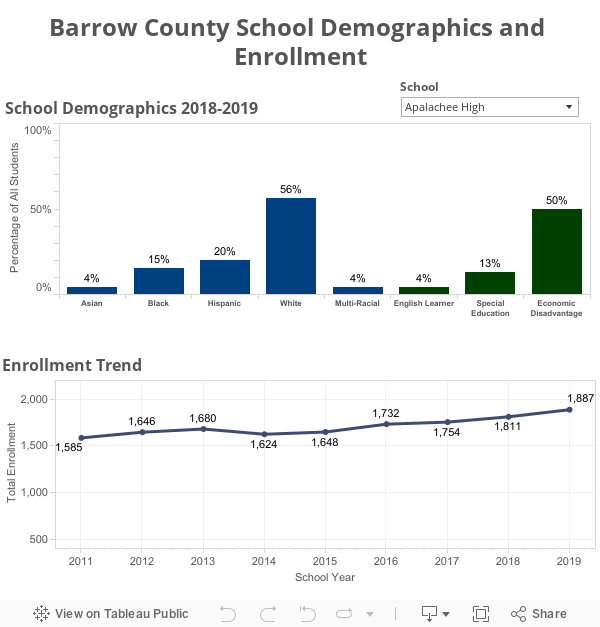
So I worked up two within a manner of minutes. In a way this application is a bit like having multiple tabs open in your browser simultaneously, something I have to do constantly when compiling data. My first binder simply takes each school in Barrow's OSA report card and puts them in tabular form. This is immensely helpful for a person like me who may be compiling reports and needs to go back and forth between each school rapidly. I think this will save me a ton of time. The second one may have more application beyond myself. I chose several of the best interactive websites and flow charts focused on choosing the correct statistical test when conducting research. This one is helpful for me, but much like the online calculator binder I could see others finding it useful as well. Which is why the sharing function LiveBinders uses is such a great idea. I imagine I will find many more uses for this application going forward.
Monday, January 18, 2010
Thing 19: Take Your Protein Pills and Put Your Helmet On
Anyway, as to how I see this working in my field, I actually think it could. I can think of many applications. I often struggle to provide resources for parents to help them interpret their children's test results. A brief podcast might just be the simplest, most direct way to do that. Same goes for instructions to teachers and administrators. Having a verbal podcast available might save me a lot of phone calls. On the whole I have to say I was shocked at how easy the whole thing was. I would have imagined it as being much more complicated. Its a testament to Web 2.o technology how easy the whole thing was.
Subscribe Free Add to my Page
Thing 18: Quite Exciting, This Computer Magic
Rather than cursing the darkness, let me step outside of a narrow focus and simply focus on some podcasts I do love. First is the Fordham Foundation's Flypaper Podcast, an interesting and irreverent podcast on national Educational policy. Another great one is the Philosophy Bites podcast. Hosted by British philosopher Nigel Warburton this podcast features short (15 minute) discussions with contemporary philosophers on issues ranging from free will, morality, infinity, nature v. nurture, ethics, consciousness and everything in between. Literate without being overwhelming, an excellent introduction to the layman just dipping toes into the broader world of philosophy. I have often thought the PB Podcast would be an excellent tool in AP classes when trying to stimulate discussion on difficult issues. Finally, for those without a statistical background but interest in learning more the University of California at Berkeley offers a series of podcast lectures teaching introductory issues in statistics. You can find it here.
Saturday, January 16, 2010
Thing 17: The World as Will and Representation...and Twitter
I'd like to focus on plurk and twitter in this post. Twitter was something that I have come around to tremendously. Initially I held out the same antipathy towards it that I do towards Facebook/MySpace. What sold me was my other hobby, College Football. Several bloggers and commentators that I love to read host twitter accounts and post during games. Usually stray thoughts, comments on strategies, jokes and one-liners, etc. When I started following these during the games I was shocked at how much they ENHANCED rather than distracted my enjoyment of football (this is likely a result of how much dead time is in a football game as can be seen here). I know less about Plurk, but my perusals of it leave me with much the same feeling. A surprisingly cool tool.
Having said that, how does this transition into the Educational realm? I spent most of my last post discussing my particular needs in finding a PLC community. Rather than rehash all that I'll try to speculate how such media might enhance (or detract) from my (at this point hypothetical) PLC community. Given how useful I have found much of this class I want to keep an open mind. But in this case the nature of what I work with (large datasets, in depth infographics, dashboards etc.) do not appear at first blush to lend themselves well to microblogging in the same way that Wikis, Blogs, GoogleDocs and other 2.0 applications do. But even if they ulitmately don't, Twitter and I will always have college football.
Thing 16: Fear and Loathing in Professional Networking
The music business is a cruel and shallow money trench, a long plastic hallway where thieves and pimps run free, and good men die like dogs. There's also a negative side. - Hunter S. Thompson
The wisdom of Dr. Gonzo here can probably be applied to my own views on social media. A mixture of fear, trepidation, intrigue, and a bit of diffidence. To put it mildly I'm conflicted. I do think putting social media within the context of a Professional Learning Network is a good way to focus on the constructive aspects of the medium, and I found Caroline's videos and links very interesting. On to the questions:
- What were your feelings on social networking before you took this course? Were you active in any form of social networking before you took this course? If so, was it personal or professional?
- If you've never gotten involved in social networking for professional purposes, had you ever considered using web-based tools as means of networking with other educators before?
- Regarding PLNs (Personal/Professional Learning Networks), what are your initial thoughts about them?
- Looking at your own professional practices, do you think building your own PLN could benefit you? Why or why not?
Most definitely. To put it bluntly, if you are trying to, say, predict CRCT scores for students using linear regression equations and you are concerned with variability as a result of inconsistent scaling among inputs, you can't really walk down the hall to find someone to bounce ideas and concerns off of. This is a very specific, esoteric problem (and by the way, it is a really one I'm grappling with, not made up) that only somewhat with a similar background can assist with. If you can't find someone like that down the hall you've got to find them somewhere. And while Facebook and MySpace may be the end of our civilization, at the very least you might as well piggyback those tools to network in the meantime.
Thing 15: Abandon Hope All Ye Who Enter Here
Saturday, January 2, 2010
Thing 14 - Opiates for the Masses...Like That's a Bad Thing
1. Oxford Statistitian Peter Donnelly discussing multiple examples of how even very educated people misunderstand statistics and probability.
2. The Fordham Foundation (an Education Think Tank) with their (somewhat tounge in cheek) take on the latest NAEP writing scores.
3. How to create a Macro within Excel.
4. Just for Kicks. Those young persons today not having the luck of growing up in the 80's have no perspective on how awesome it was to spend all saturday morning watching cartoons when you are 9 or 10 (and the latest Yu Gi Oh incarnation does not count kids). This montage brings all that back a bit. Warning equal parts cheese and nostalgia (some of them are, in retrospect, really awful).
4B. My own personal obsession, Parkour.
Teacher Tube was a bit new to me but I found it extremely interesting. Among my favorites are several videos of Middle School students explaining statistical concepts. There is hope for the next generation yet! One example below.
Thursday, December 31, 2009
Thing 5: Continued...Pay for Play
Nonetheless, they provide useful frameworks to talk about value distinctions and differential philosophies. I would like to propose one of my own coining. That of the Engineering Perspective versus the Humanities perspective. Broadly, the Engineering perspective look at societal issues as problems to be solved dispassionately, with an eye to the most efficient, elegant solution. The Humanities perspective seeks to impute moral and ethical considerations into the mix. A solution that solves the problem while violating strongly held mores is not a solution worth having. Obviously this is in large part a reformulation of the Pragmatics v. Principal argument, and I don't believe either perspective is more valuable than the other. Both are needed and have much to speak for themselves. Nonetheless, occasionally an issue comes up that clarifies the distinction nicely.
Popping up in my Google Reader today from the Inside School Research blog on Edweek comes this article, highlighting a new research study from the UK in which evidence was found that a program that pays students for staying in school had positive results. From the article:
The program went national in 2004. But, in 1999, when it first began, it was available only to students in some urban school districts whose family incomes fell below a certain level. The weekly payments, which typically came to 30 to 40 British pounds, were about a third of what students would have earned had they been employed instead, according to the study.
The sums were apparently large enough to entice more students to stay in school, though. School participation rates in the nine experimental districts were 4.5 percentage points higher in the first year of the program than they were in nine demographically similar areas in which no payments were offered. In the second year of the program, participation rates were 6.7 percentage points higher. The bigger the weekly payment, the study also found, the greater was the impact.
My intention in highlighting this is not to comment on the shortcomings or validity of the study. It is probably too early to do that. Nonetheless, this seems to me a classic wedge issue that will deeply split those within education with Engineering perspectives versus those with Humanities leanings. If it turns out that cash incentives DO in fact result in greater student outcomes, those with an Engineers bent will likely push hard for similar programs on a large scale in the U.S. Why spend money on programs and support staff with little or no impact on learning when we can simply funnel that money directly to students and get (literally) more back for the buck? Those with Humanities perspective will likely blanch at an idea that throws out the cherished ideas of intrinsic motivation, learning for learning's sake, and edification based on knowledge into crude cash payments for finishing school. For many people the idea of paying students just feels deeply wrong if not outright immoral.
My point here is not to take sides or to give an opinion. There is far more research and debate that needs to happen before a program like this would see the light of day (if ever) on a large scale. But rest assured...this WILL be a debate soon (there have already been inklings of it here and there). And remembering the Engineer/Humanities distinction will be a useful tool in sorting through arguments when that time comes.
Wednesday, December 30, 2009
Thing 13: I try to leave but they pull me right back in...
Wednesday, December 2, 2009
Thing 12: The Nameless Dread
Thursday, November 12, 2009
Thing 11 - Come and See the Violence Inherent in the System
Wednesday, November 11, 2009
Thing 10: A Nation Turns its Lonely Eyes to Flikr
Fortunately the whole world loves colorful info-graphics! After all, if they didn't how would U.S.A. Today even stay in business? I tend to find informational graphics to be fascinating and often aesthetically meaningful (and as the child of a Ph.D. in Art History mother I am quite prepared to defend this rigorously). When done well information graphics can be, well, beautiful. And Flikr provided some excellent examples that were available under creative commons. You'll see the whole bit in my shortly to be posted thing 11. But under CC licensing I was able to find one of my favorites. The following info-map displays lexical usage of generic terms for soda by county, all the way from Coke to Pop to "other" (seriously what's wrong with you western North Carolina? Pick a term for crying out loud). Fun and informative.
P.S. Click on the picture and enlarge your screen to see detail.